
Bolt-Action vs Semi-Auto for Long Range Shooting
Jan 7th 2026
Bolt-action and semi-automatic actions represent two primary categories in modern rifle technology, each engineered with specific strengths that cater to varied shooting requirements. A bolt-action demands shooter input to complete the loading and ejection cycle, relying on mechanical precision for each step. In contrast, a semi-automatic utilizes the residual energy from the fired cartridge, either through gas redirection or piston actuation, to automatically complete the ejection and loading of the next round. This major difference not only defines their mechanical behavior but also impacts aspects like maintenance needs, heat transfer management, and adaptability to different environments, making one or the other more suitable depending on the use context.
How Bolt-Action Rifles Work
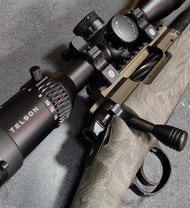
The operation of a bolt-action rifle centers on manual control of the firing process. To begin, the shooter raises the bolt handle, which rotates to unlock the lugs from the receiver. Pulling the bolt rearward extracts the spent cartridge and ejects it. Pushing forward strips a new round from the magazine and seats it in the chamber, followed by rotating the handle downward to re-engage the lugs and lock the breech. This analog method ensures that every action is intentional, minimizing negligent discharges and allowing for intentional actions between shots. The locking lugs create a highly rigid connection capable of withstanding chamber pressures exceeding 60,000 psi. With fewer moving parts, bolt-actions create consistent barrel harmonics, the natural vibrations that can influence bullet stability and trajectory.
How Semi-Automatic Rifles Work
Semi-automatic rifles automate much of the reloading process by directing the energy from the gases of the fired round. In gas-operated systems, a portion of the propellant gases is diverted through a port in the barrel to a piston or directly to the bolt carrier group (BCG), driving it rearward to extract and eject the case while compressing the buffer spring housed in the buttstock, resetting the hammer simultaneously. When that buffer spring pushes forward, it forces the BCG forward again, chambering the next round from the magazine. Piston-driven variants use a separate rod to transfer this force, often keeping the receiver cleaner by eliminating most of the gases and carbon buildup seen from direct impingement systems like the AR-15. This cycle enables rapid firing with minimal shooter intervention beyond pulling the trigger. However, the reciprocating mass of the BCG introduces additional movement, which can affect barrel harmonics and heat distribution over prolonged use.
Key Mechanical Differences
The primary distinctions lie in the methodology of the loading process and the complexity of the internal components. Bolt-actions are minimalist by design, with a reduced parts count that lowers the likelihood of mechanical failures while enhancing breech rigidity at the moment of firing. Semi-automatics, by incorporating the BCG and their energy-harnessing systems, add weight and potential failure points, particularly in dirty or extreme conditions where gas ports might fail due to carbon buildup. Barrel harmonics in bolt-actions remain more predictable, whereas semi-automatics capitalize on their ability to maintain sustained fire rates. Tolerances within bolt-actions can be engineered to exceptionally tight standards, while semi-automatics rely on slightly looser parameters to facilitate the demands of rapid self-cycling. Shooters that require meticulously calibrated tolerances often select bolt-actions for just these qualities.
Bolt-Action vs Semi-Auto Accuracy: Which Is Better?
Accuracy assessments can vary based on the intended application and build quality of either a bolt-action or semi-automatic rifle. Bolt-actions generally excel in situations requiring absolute precision, thanks to the rigid breech during the firing sequence, which limits disruptions to the firing of the round. Semi-automatics can achieve somewhat comparable results in certain situations, but the inherent internal motion from gas or piston systems can be the primary cause of any variables in accuracy, such as thermal shifts that subtly alter barrel harmonics. Range testing consistently shows bolt-actions easily maintaining 0.5 MOA groupings more reliably beyond 800 yards, whereas semi-automatics might average closer to 1-1.5 MOA unless extensively modified with match-grade elements. For shooters who are focused on long-distance marksmanship, bolt-actions offer greater repeatability, which explains the longstanding preference for bolt-actions over semi-automatics among professional shooters.
Advantages of Bolt-Action vs Semi-Auto
Bolt-actions hold several key benefits over semi-automatics, particularly in contexts where distance and precision are paramount. The fixed breech in bolt-actions creates an environment where the behavior of the barrel during the firing sequence is more predictable, with a much greater chance of more accurate shot groupings. Semi-automatics perform adequately but must contend with the constant movement and looser tolerances from their gas or piston operating systems that can occasionally cause variations in shot groups.
Because of the fewer parts needed with a bolt-action, these rifles are consistently easier to clean and maintain. One of the biggest failure points within a semi-automatic is the fact that the bolt most likely requires the gas from the fired round to operate the bolt, blowing carbon and debris directly into the bolt and breech. This fouling can cause serious failure points in a semi-automatic, leading to misfeeding, double feeds, or an incomplete bolt lockup.
Where semi-automatics match the benefits of a bolt-action is in the trigger. Modern production has allowed for the advancement of drop-in trigger systems for both types of rifles. While more common in bolt-actions, there are semi-automatic trigger options that can have a trigger pull of under one pound. Such a light trigger gives the shooter better accuracy due to the reduced variable of pulling a shot based off the trigger finger. It is not recommended to have such a light trigger pull on a semi-automatic, but the options are out there that rival any custom trigger for a bolt-action.
Is an AR-15 as Accurate as a Bolt-Action?
AR-15 platforms can come close to bolt-action accuracy when you equip them with high-end match-grade barrels and free-floating handguards to minimize vibrations. Out of the box, though, they often fall short because the moving bolt carrier group can disrupt the rifle's rhythm and consistency. With some tweaks, you might hit 1 MOA groups reliably, but bolt-actions tend to deliver even tighter sub-0.5 MOA performance right away. Where the AR-15 excels is varmint or predator hunting. Semi-automatics like the AR-15 give you the ability for quick follow-up shots on fast-moving targets like hogs. When you’re standing on the edge of a field and there are a dozen feral hogs needing dispatched, the AR-15 is the obvious choice over a slow-feeding bolt-action.
What Are the Disadvantages of Bolt-Action Rifles?
Bolt-action rifles come with a few notable drawbacks that can limit their use in certain situations. For starters, reloading takes more time since you have to manually cycle the bolt for each shot, which isn't ideal in fast-paced or dynamic environments where quick follow-ups matter. They also require more physical manipulation from the shooter, which can lead to fatigue during long sessions or extended outings from constantly working the bolt. Recoil management is another area where the semi-automatic excels since they employ a buffer system to mitigate felt recoil to the shooter. When firing a bolt-action, all of the recoil is absorbed into your shoulder. In defensive or tactical roles, semi-automatics have the edge when it comes to firing multiple rounds on target. These limitations often disappear for long-range shooting, where a bolt-action’s precision makes them the better choice for accurate groupings.
The 1934 Armory Advantage: Precision Bolt-Action Rifles Parts
Started in 2023 in Hanover, Pennsylvania, 1934 Armory specializes in the manufacture of high-performance bolt-action receivers. The foundation of any precision rifle build, these actions are purpose-built for durability and extreme accuracy. Their BE-series actions offer you the option to choose from short-action or long-action hosts for your preferred caliber rifle. Each action is strong enough to withstand the stresses of heavier magnum calibers while still maintaining a lightweight profile, giving backcountry hunters a perfect choice for building a custom rifle. Built around the Remington 700 footprint, each model includes a one-piece bolt, PVD coatings for added protection, and mechanical ejectors to improve longevity and fluid operation, meeting the needs of all shooters who demand the most out of their rifle.
Final Verdict: Which Rifle Should You Choose?
In the end, your choice between a bolt-action and semi-automatic rifle boils down to what you need most. If precision at long distances or taking ethical hunting shots is your priority, then a bolt action is what you need. Semi-automatics are the correct choice if you are needing the ability to make quick follow-up shots onto multiple targets where a higher rate of fire is required. Overall, the rifle delivering the best accuracy is often a well-tuned bolt-action. Reach out to 1934 Armory to get started building your dream bolt-action rifle today.