
What is a Bolt Action Rifle? Complete Guide to How It Works & Uses
Jan 7th 2026
Bolt-action firearms have long held a prominent place in the world of shooting sports and all areas of firearm ownership, thanks to their blend of straightforward engineering and dependable function. These rifles put the control squarely in your hands, letting you manage the entire process of loading and firing with deliberate actions that are the definition of reliability and consistency. Whether you're stepping onto a competition range or heading out for a day of hunting whitetail deer, bolt-actions offer a solid starting point for a functional rifle. At 1934 Armory, their team specializes in creating precision bolt-action components that are the starting point for anyone’s ideal custom build.
What is a Bolt Action Rifle?
Bolt-action rifles make up a specific classification of firearms where you manually control a bolt to cycle through the ammunition in the magazine. This type primarily covers rifles, though it includes some shotguns, and its hallmark characteristic is that it requires active input from the shooter instead of relying on an automatic loading process.
A bolt-action rifle involves a bolt that rotates to seal the chamber, differentiating itself from other manual systems like levers or pumps. What makes this rifle different is the hands-on rotation and sliding of the bolt to manage loading, locking, and extracting cartridges. The bolt action of a gun refers to the way the bolt twists to lock its lugs into the receiver, containing the high pressures generated during firing sequences.
Critical parts of a bolt-action rifle include locking lugs, which are raised sections on the bolt head that fit into matching cuts in the receiver to seat and lock the round into place. The rotating bolt spins to activate these lugs. The extractor grabs the cartridge rim to pull it free from the chamber, and the ejector launches the empty case clear.
Bolt-Action Operating Cycle
Bolt-actions operate through a series of actions you as the shooter will perform. The operation of the bolt-action is entirely dependent on user input, from loading and feeding to extracting and loading again.
The first step in the operation is inserting a loaded magazine into the rifle. Raise the bolt and slide it rearward, allowing full clearance from the seated round at the top of the magazine. The bolt is then pushed forward, catching the rim of the first round and pushed into the chamber of the rifle’s barrel. The bolt knob is then pushed downward to lock the bolt into place, creating a sealed environment where high pressures from the round cannot escape in any other direction other than out the front of the barrel.
You pull the trigger, firing the round, and then raise the bolt knob to unlock it. Pulling the bolt rearward, the extractor catches the rim of the spent shell casing, pulling it out of the chamber. The ejector then throws the casing out of the rifle, and with another forward push of the bolt you reload the rifle with the next round in the magazine. This process repeats until the magazine is empty or you are done shooting.
Advantages of Bolt Action Rifles
Bolt-actions bring clear benefits that make them strong choices in many shooting areas. There are many areas where a bolt-action is the preferred choice over other options due to the ease of use and its resistance to potential failures like misfeeds or jamming during the loading process.
Accuracy, Simplicity, and Reliability
The reason bolt-action rifles are so inherently accurate is due to the fact that a fixed chamber lock limits motion during firing, steadying the barrel to reduce any harmonics interference during the firing sequence. Unlike many semi-autos that use gas redirection to reload, a bolt-action avoids major rapid heat changes in the critical components that can affect accuracy. The simple design and a lack of moving parts gives a bolt action its incredible reliability. It is this simplicity that gives the bolt-action its famed reliability. And because of the few components needed for your build, a bolt-action rifle is much easier to clean and maintain than other types of rifles like semi-automatics.
Common Uses for Bolt Action Firearms
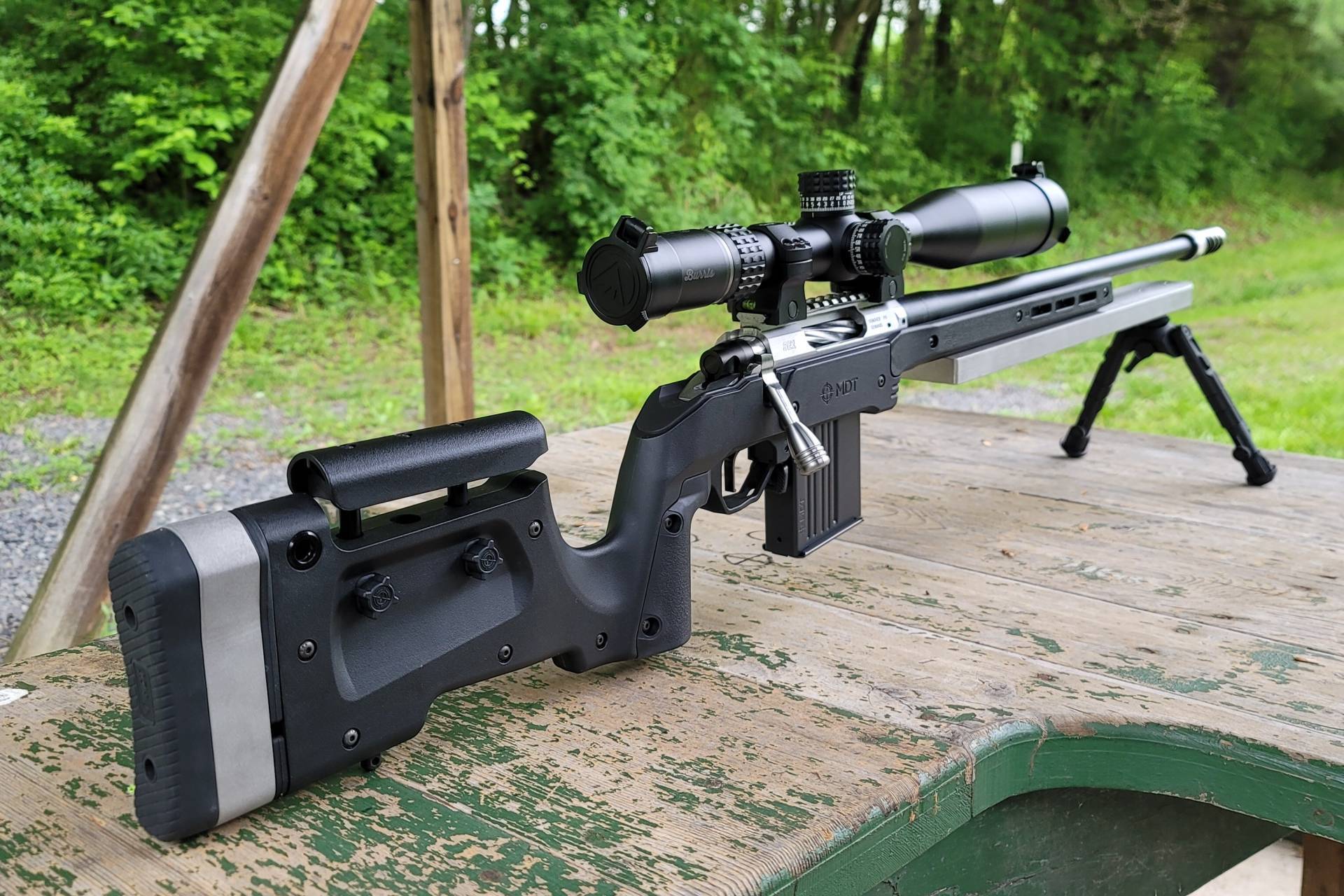
When hunting, bolt-actions give the control needed for safe operation in places where snagging on trees or slipping due to uneven terrain is a real possibility. Precision shooters find bolt-actions to be much more inherently accurate at longer distances due to the lack of moving parts. Competitive shooters rely on this accuracy to place higher in scored events, prioritizing steady accuracy over a faster rate of fire. With the simpler operation, competitive shooters can focus more on the aspects of the fundamentals of shooting over worrying about failure points in semi-autos that can ruin a round or string of fire for record. In tactical situations, in support of others with semi-autos, a marksman with a bolt-action rifle is a prized asset, giving the team the ability to accurately and effectively lay down long-distance precision fire when the situation necessitates it.
Popular Bolt Action Rifle Examples
The Mauser 98 started with its controlled round feed and two lugs, shaping guns like the Springfield 1903 used in the early 20th century. The Lee-Enfield rifle had rear-locking lugs for quick work, serving UK forces for decades. More modern examples include the Remington 700, one of the most customizable and widely copied designs to date and extensively used in police/military and sport shooting. The Ruger American Rifle offers a budget-friendly rifle with above average accuracy that is a great starting point for your first foray into bolt-action rifles.
The 1934 Armory BE series is a great place to start if you are looking to build the most accurate bolt-action rifle possible. Based on the Remington 700 footprint, the BE series is precision built for the most accuracy you can squeeze out of a bolt-action.
1934 Armory BE Series
The BE1, a short-action rifle utilizes a 2-lug design and only weighs 32 ounces. The bolt is fluted to eliminate any unnecessary weight to the design. A recoil lug and reduced ejection port gives the action rigidity while still providing a stable yet compact build.
The BE2, a long-action designed with a 2-lug bolt comes in at 37 ounces. Capable of handling much heavier magnum calibers, the BE2 has an enlarged ejection port capable of reliably extracting longer brass casings. Built with tight tolerances, this model can withstand the stress of heavier recoil for the most hard-hitting loads.
The BE3 short-action is a 3-lug bolt model, weighing only 25 ounces, perfect for lightweight builds required for those who need to shave off any additional weight possible. The action is skeletonized to reduce the weight load on those who are trekking into the backcountry for extended hunts.
The BE4 long-action boasts a 3-lug bolt and weighs just 27 ounces. It has a 20 MOA Picatinny rail to give extra elevation needed for those taking shots and longer distances. With an oversized bolt knob, you will be able to manipulate the action even wearing heavy gloves, perfect for austere environments.
Each of the actions above are designed to fit into Remington 700 inlets and can utilize Remington 700 triggers. This makes it extremely easy to tailor your 1934 Armory build to your needs.
Final Thoughts
Bolt-action firearms remain the pinnacle of dependable shooting, offering a mix of simplicity, accuracy, and durability that meets the demands of every shooter. From their key components like locking lugs and extractors to the advantages in precision and reliability, these systems provide a solid platform for both beginners and experts. Whether you prioritize controlled round feed for rugged use or push feed for smooth operation, understanding the mechanics helps you select the right setup. 1934 Armory's BE series is the premium choice for those seeking out the most accurate precision bolt action systems, building the foundation of a bolt-action rifle that enhances performance. Check out 1934 Armory today to start your first custom bolt-action rifle build.