
Large Batch Firearm Manufacturing
1934 Armory provides large batch firearm component manufacturing from our facility in Hanover, Pennsylvania, machining on ISO 9001–certified Elsner Engineering Works equipment. Our 9-axis CNC platform machines a complete part in a single cycle, holds tolerances down to tenths, and runs semi-autonomously for high-volume programs. We're built for recurring orders of 1,000+ units for firearm brands, OEMs, and contract programs. We are an FFL Type 07 Manufacturer, SOT-licensed, and fully ATF-compliant.
Key Takeaways
- Machined on ISO 9001–certified Elsner Engineering Works equipment; FFL Type 07 Manufacturer; SOT-licensed; fully ATF-compliant.
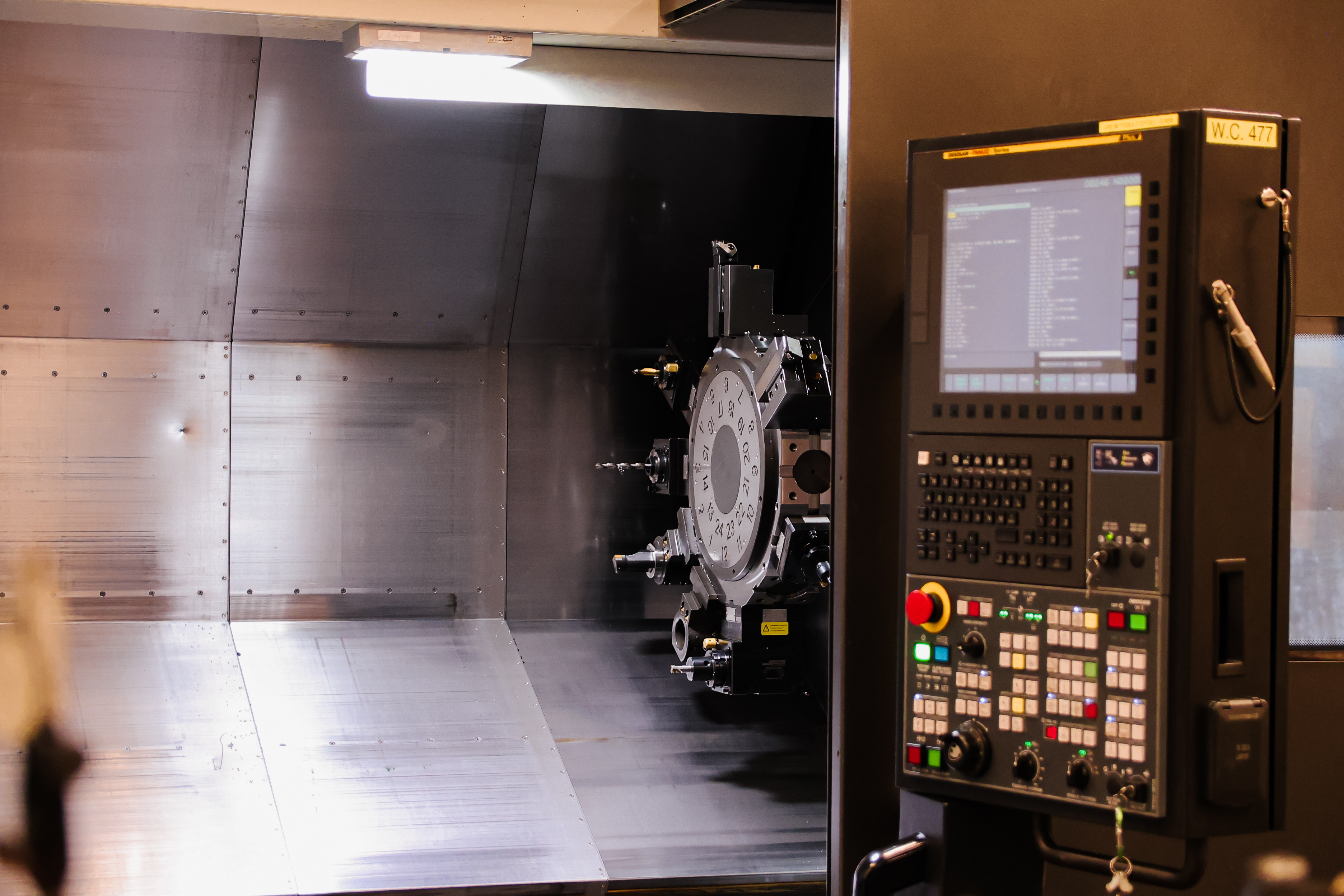
- Our 9-axis flagship CNC machines a complete part in a single cycle: bar of material in, finished part out.
- We hold tolerances down to tenths using Renishaw in-process part and tool probing, verified by First Article Inspection.
- Lights-out, semi-autonomous production lets high-volume programs run outside staffed hours without losing consistency.
- We machine the four materials the firearms industry actually uses: steel and steel alloys, stainless, aluminum, and titanium, plus machined polymers.
- Our sweet spot is 1,000+ unit recurring contracts. We will quote smaller specialty work when the value of the precision justifies the machine time.
What is large batch firearm manufacturing?
Large batch firearm manufacturing is the production of firearm components in recurring runs that scale from hundreds into thousands of units while holding the same tolerances on the last part as the first. What defines it is not a single order number. It is the production system behind the order: the machines, the in-process inspection, and the documentation that keep thousands of parts interchangeable.
That distinction matters because plenty of shops can cut one good part. Far fewer can cut the ten-thousandth part to the same print without drift. For a firearm brand or OEM, the risk in scaling is exactly there. A receiver that fits on the prototype bench but varies by a few tenths across a production lot creates fitment and cycling problems you only discover after the parts ship. We build around removing that variation, which is why our process control gets as much attention on this page as our machine list.
Built for scale: our 9-axis flagship + multi-axis production platform
Our headline capability is a 9-axis CNC machine that completes a part in a single cycle. We feed a bar of material in one end and a finished component comes out the other, with the mill head working on the lathe so milling and turning happen in one setup. Every time a part moves between machines it picks up a chance for misalignment, so completing it in one setup is how we keep dimensional consistency across a long run.
Around that flagship we run multi-axis turning and wire EDM, which we operate in-house rather than sending out. Wire EDM cuts internal features and raceways with very little variation between parts, which keeps downstream assembly predictable. Holding these processes under one roof in Hanover also keeps scheduling in our control: when a customer needs to move a delivery date or push a revision, we are not waiting on an outside vendor's queue to respond.
See OEM design collaboration if you need DFM support too →
Components we produce in volume
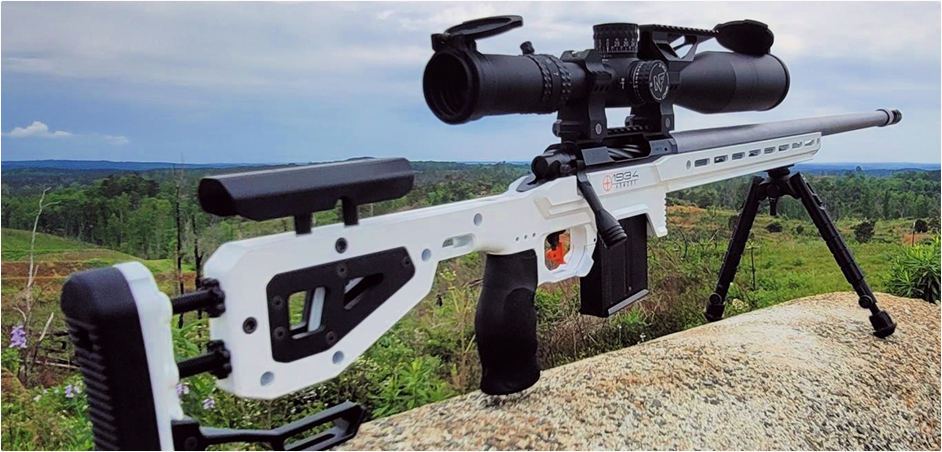
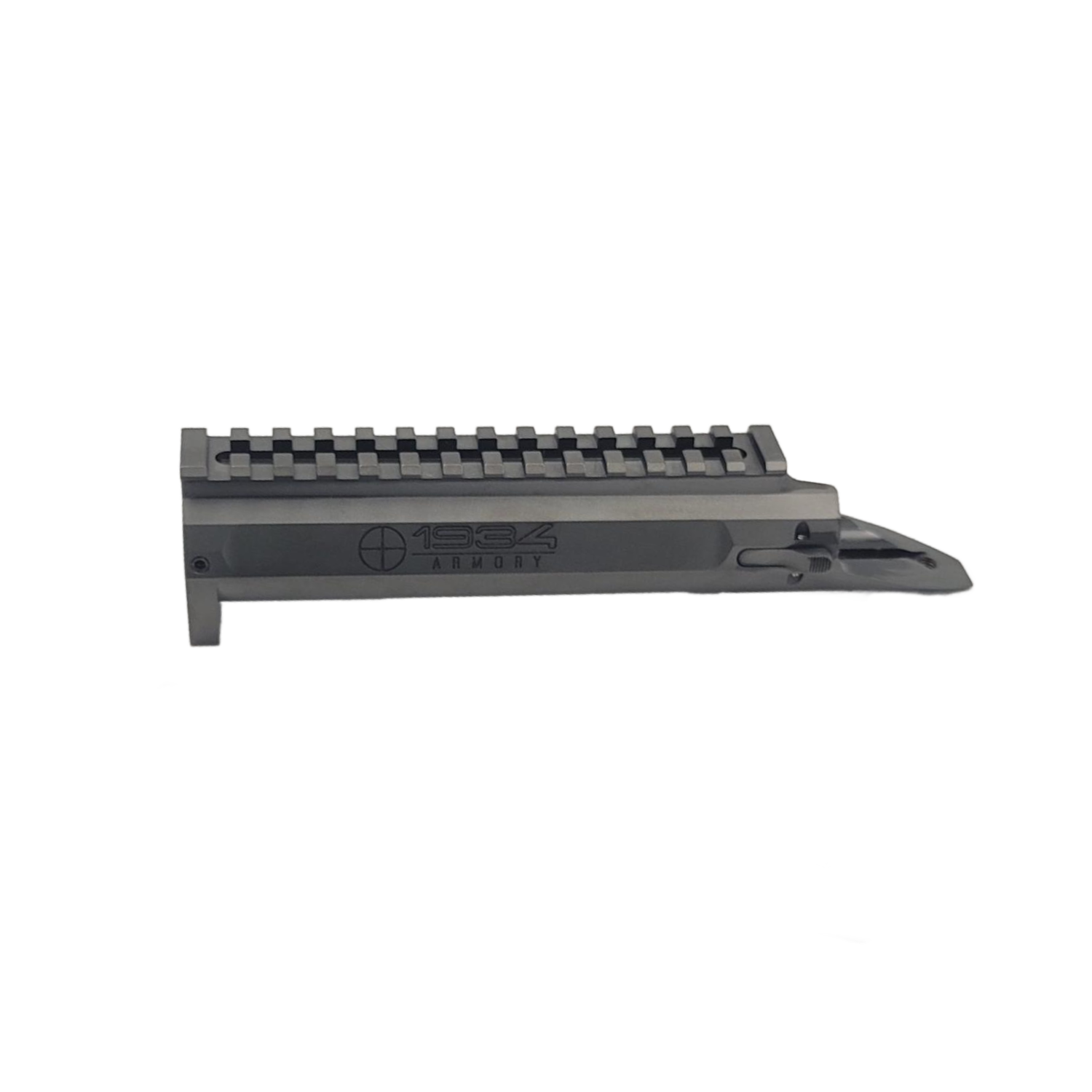
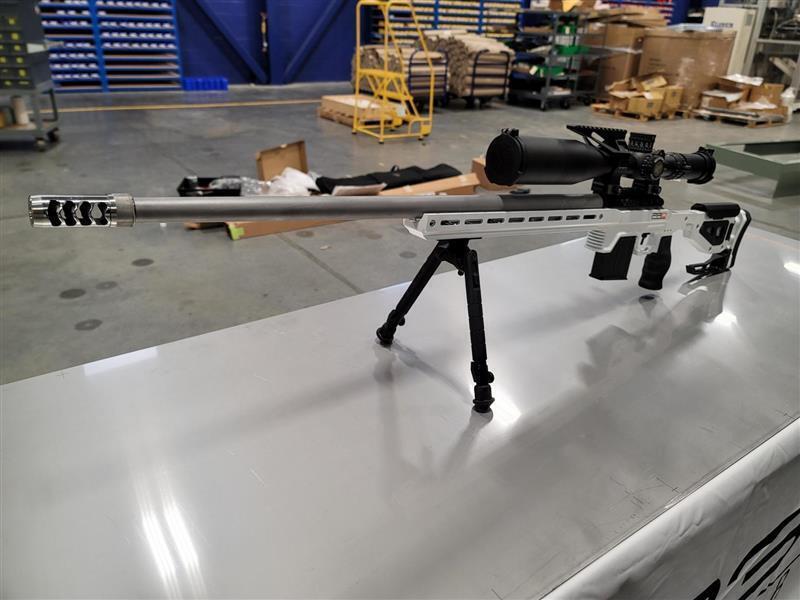
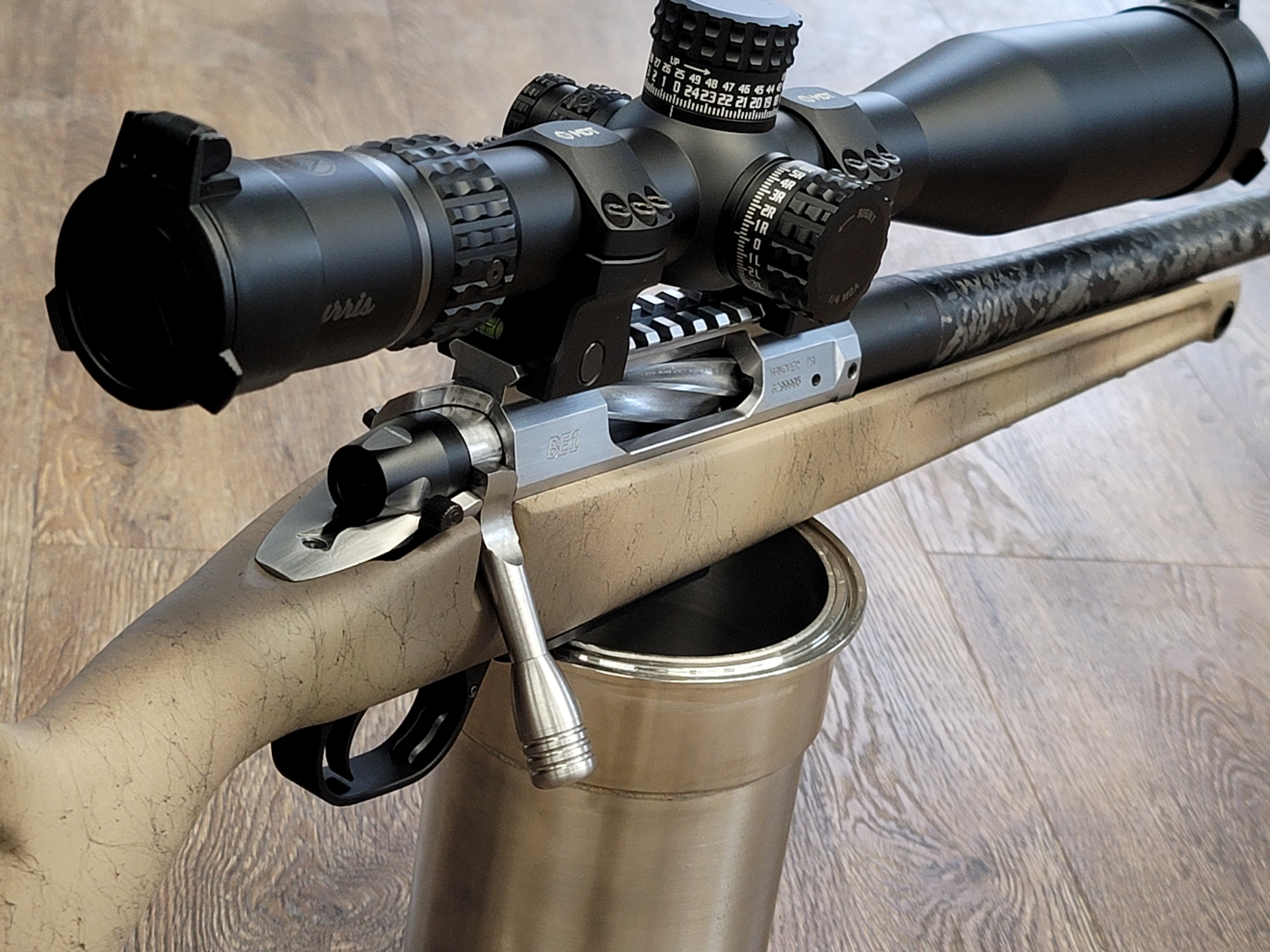
At production volume we machine bolt action receivers, bolts and bolt assemblies, muzzle brakes, and custom production parts built to your specification. Our own BE-series bolt actions (BE1, BE2, BE3, BE4) are the proof point: they are designed and produced in-house on the Remington 700 footprint, so what we run for our own product line is the same capability we put behind a customer program.
We work in the four materials that cover almost all firearms work: steel and steel alloys, stainless, aluminum, and titanium, along with machined polymers. We do not chase exotics like Inconel or tungsten, because the cost rarely serves the part. One thing we do not make is barrels. Barrel work needs threading and rifling equipment outside our scope, and we would rather point you to the right facility than quote you a job we are not set up to do well.
How we hold tolerances down to tenths at volume
We hold tolerances down to tenths (in the ±0.0001″ range) by inspecting inside the cycle, while the part is still on the machine. Before a program runs, First Article Inspection verifies that the first part meets every dimension on your print. During the run, Renishaw in-process part probing and tool probing measure the work and the cutting tools while the machine is cutting, so the system catches wear and drift before it turns into scrap.
Tool probing is also what makes our lights-out production safe. When a run continues through the night unattended, the probe confirms each tool is intact and in position before it cuts, which prevents the crashes that would otherwise end an overnight shift. Across the full program we apply Statistical Process Control to watch consistency batch to batch, and we keep lot traceability so every component can be tied back to its material and its production records. For a procurement team, that documentation is what turns "we machine good parts" into something you can audit.
Request our FAI process documentation. We'll send the standard pre-program docs → info@1934armory.com
Renishaw in-process part and tool probing
During the run, Renishaw probes measure the work and the cutting tools while the machine is cutting, so the system catches wear and drift before it turns into scrap. Tool probing is also what makes lights-out production safe: the probe confirms each tool is intact and in position before it cuts.
First Article Inspection and Statistical Process Control
Before a program runs, First Article Inspection verifies that the first part meets every dimension on your print. Across the full program we apply Statistical Process Control to watch consistency batch to batch.
Lot traceability and documentation
Lot traceability ties every component back to its material and its production records. For a procurement team, that documentation is what turns “we machine good parts” into something you can audit.
Compliance and credentials for OEM and defense-adjacent programs
All 1934 Armory parts and components are machined using ISO 9001–certified machinery from Elsner Engineering Works, our parent company. 1934 Armory is an FFL Type 07 Manufacturer, SOT-licensed for NFA-regulated components, and fully ATF-compliant. What each credential covers during vendor qualification, including the independently audited quality system behind Elsner's ISO certificate, is documented on our Certifications & Quality page.
For programs with a defense dimension, we operate as a qualified third-party manufacturer under ITAR-certified prime contractors when a project calls for it. That is a statement of capability and how we fit into a supply chain, not a claim of active defense contracts. We will tell you plainly where we sit relative to your compliance requirements so there are no surprises during your vendor-qualification process. 1934 Armory was founded in 2023 by Bert Elsner II and is a division of Elsner Engineering Works, which has been manufacturing since 1934, the year our name honors. That parent-company depth stands behind our compliance posture.
Order sizing, lead times, and the right-fit program
Are you looking for quality, precision, and volume? That is the question we open with, because it describes the work we are built for: recurring programs of 1,000+ units, ideally on a repeating monthly cadence, where multi-axis machining and lights-out production deliver their real cost and consistency advantages. We do not have a hard minimum. We will quote smaller specialty runs, and the pricing simply reflects the machine setup behind them, so they make sense when the value of the precision outweighs the per-unit cost.
We would rather be straight with you than win a job that does not fit. If you need fifty of something once a year, we will quote it, and we will also tell you when a smaller facility is the better answer for your unit economics. Lead time depends on part complexity, material, and volume; specific windows are available on request, and most production programs settle into a confirmed monthly cadence once the first article is approved.
1,000+ unit recurring fits. Send us your spec for a quote →
Frequently Asked Questions
What's your minimum order quantity for large batch production?
We don't enforce a hard minimum. Our sweet spot is recurring programs of 1,000+ units, where our production systems deliver their best cost and consistency. We'll quote smaller specialty runs too, with pricing that reflects the machine setup involved, so they fit best when precision matters more than unit cost.
What materials do you machine at production volume?
We machine the four materials the firearms industry relies on most: steel and steel alloys, stainless steel, aluminum, and titanium, plus machined polymers. We don't work in exotics like Inconel or tungsten, because the cost rarely justifies the part for firearm components.
Can you handle defense or government-adjacent subcontract work?
Yes, as a qualified third-party manufacturer working under ITAR-certified prime contractors when a project calls for it. We hold FFL Type 07 and SOT licensing, machine on ISO 9001–certified parent-company equipment, and we maintain the lot traceability and documentation that prime-contract subcontracting requires.
How do you hold tolerances across thousands of units?
We verify the first part with First Article Inspection, then use Renishaw probing to measure parts and tools inside the machining cycle and catch drift before it becomes scrap. Statistical Process Control monitors consistency batch to batch, and lot traceability ties every component back to its material and production records.
Do you manufacture barrels?
No. Barrels require threading and rifling equipment that's outside our scope. We focus on receivers, bolts and bolt assemblies, muzzle brakes, and precision-machined components and sub-assemblies built to your specification.
Why choose domestic manufacturing for a firearms program?
Domestic production in Hanover, PA gives you direct communication, scheduling flexibility, and supply-chain stability that overseas sourcing struggles to match. You avoid tariff exposure and shipping uncertainty, and when a revision or a date needs to move, you're working with a team you can reach the same day.
Related services
- Engineered Solutions: the full OEM and contract manufacturing hub
- OEM Firearm Manufacturing: design collaboration + branded production
- Contract Manufacturing: build-to-print without design
- Certifications & Quality: licensing, certifications, and the quality system behind every program
- How to Choose a Firearm Contract Manufacturer: buyer's guide
- BE-series bolt actions: our in-house engineered proof point
- About 1934 Armory: facility, parent company, founder
Request a Production Quote
If you're preparing to scale a firearm component program, send us your spec and we'll tell you honestly whether we're the right fit and what it will take to run it. We support firearm brands, OEMs, and contract programs that need dependable high-volume production backed by precision machining and full documentation. Request a quote →, or email info@1934armory.com directly. Ask about a facility tour in Hanover, Pennsylvania.
Don’t hesitate to reach out with the contact information below or send us a message using the form.